The global plastics industry is undergoing significant change. For decades, polymers have supported modern manufacturing because of their durability and efficiency. However, the traditional linear model of take, make, and dispose has reached its environmental limits.
Today, the Circular Economy is emerging as a core business strategy that redefines how polymers are distributed, used, and recycled.
Why is the Circular Economy Urgent?
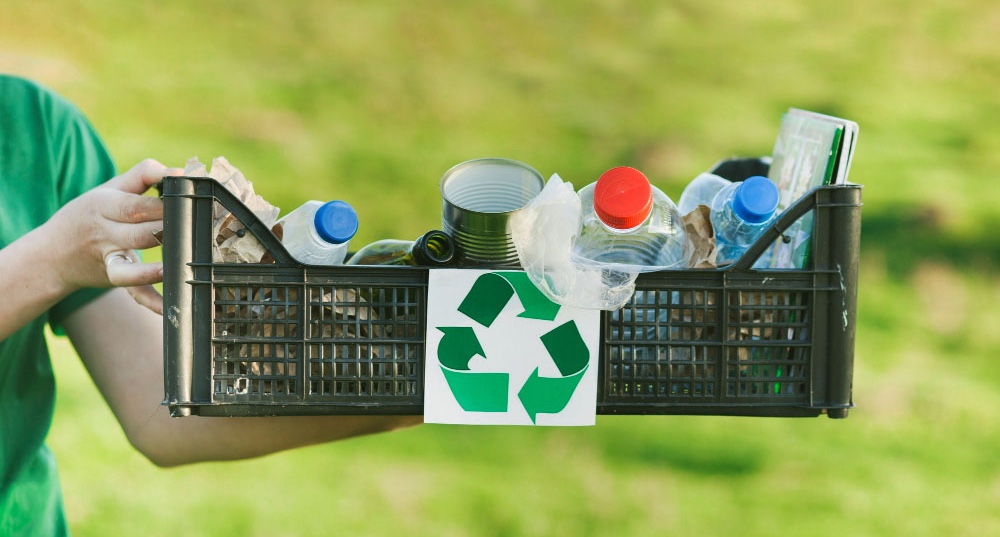
According to the Ellen MacArthur Foundation, without systemic change, plastic entering the marine ecosystem will continue to increase sharply. The circular economy addresses this by transforming plastic from a “single-use item” into a “valuable asset” that remains in the economic cycle without losing value.
In the Journal of Cleaner Production, experts emphasize that Polymer Recycling and Sustainability depend heavily on the efficiency of the distribution system. Distributors no longer merely act as shippers of goods but as knowledge bridges connecting material innovations with real-world needs on the production floor.
Paradigm Shift in Polymer Distribution
Previously, polymer distribution prioritized volume and delivery speed. The focus has now shifted to a more strategic approach:
1. Design for Recycling
Many plastic products are difficult to recycle because of complex material compositions. Distributors now help manufacturers select monomaterials or polymers that are easier to recycle while maintaining structural integrity.
2. Post-Consumer Resin (PCR) Consistency
Using recycled materials from consumer waste (PCR) has become standard for global brands. The main challenge is maintaining consistent material quality in every batch, making supply chain transparency essential.
3. Polymer Technology Innovation
The shift from mechanical to chemical recycling now enables plastics once considered “non-recyclable” to be reprocessed into raw materials of equal quality to virgin materials.
Bridging Quality and Sustainability
A major obstacle for manufacturers adopting environmentally friendly materials is concern over reduced product performance. Fears that recycled plastic may be more fragile or harder to process often hinder innovation.
The right distribution partner is essential in this transition. Companies such as Americorp recognize that moving to eco-friendly materials requires careful technical assessment. Through rigorous material selection and laboratory testing, recycled polymers can now meet the quality standards of virgin materials.
Beyond supplying raw materials, the goal is to ensure each material change supports production efficiency. With proper technical support, transitioning to sustainable materials becomes an added value rather than a risk.
Looking to the Future of the Industry
The future of polymer distribution involves taking responsibility for the entire material life cycle, not just moving goods. As noted in the Journal of Cleaner Production, companies adopting circular economy principles now will be more competitive in a low-carbon future.
Plastic will continue to play a vital role in society, but our approach to its use is changing. Through strategic, long-term collaboration between manufacturers and distributors, the industry can remain productive while aligning with environmental goals.
Taking initial steps toward sustainability can be challenging, but this journey does not have to be taken alone. Conversations about greener materials and more efficient production are valuable starting points for meaningful change.
References
- Ellen MacArthur Foundation. The New Plastics Economy: Rethinking the future of plastics.
- Journal of Cleaner Production. Polymer Recycling and Sustainability: Challenges and Opportunities in a Circular Economy.


