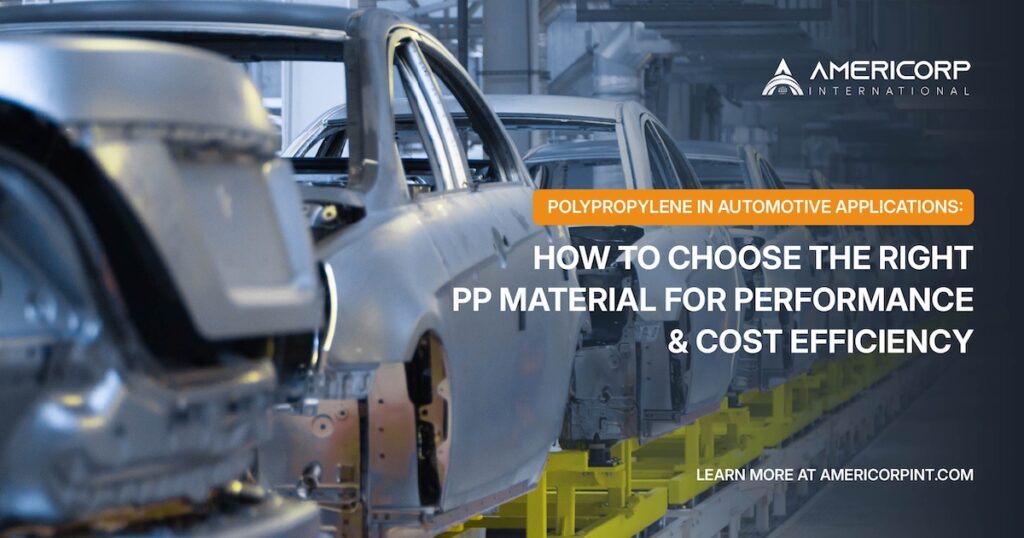
The automotive industry continues to demand materials that are lighter, stronger, and more cost-efficient. One material that consistently meets these requirements is Polypropylene (PP).
Known for its durability, chemical resistance, and cost efficiency, polypropylene has become a core material in modern vehicle manufacturing. However, one challenge remains:
How do you choose the right polypropylene grade for your specific automotive application?
Selecting the wrong PP material can lead to performance issues, production inefficiencies, and long-term reliability concerns. Understanding the differences between grades and formulations is essential to achieving optimal results.
Why Polypropylene Is Widely Used in Automotive Applications
Polypropylene offers a strong balance between mechanical performance and economic value. This combination makes it ideal for both structural and non-structural automotive components.
1. Lightweight for Improved Efficiency
With a low density of approximately 0.9 g/cm³, PP contributes to overall vehicle weight reduction. Lighter components support fuel efficiency improvements and electric vehicle range optimization.
2. Excellent Chemical Resistance
Automotive components are routinely exposed to:
- Fuel
- Lubricants
- Coolants
- Cleaning agents
Polypropylene maintains structural integrity and dimensional stability in chemically aggressive environments, making it suitable for under-the-hood and fluid-contact applications.
3. High Impact and Fatigue Resistance
Through copolymer modification or reinforcement, PP can be engineered to provide strong impact performance. This makes it suitable for:
- Bumper systems
- Battery housings
- Interior trim components
- Protective covers
4. Cost Efficiency in High-Volume Production
Compared to engineering plastics such as ABS or polyamide, polypropylene offers:
- Lower material cost
- Shorter processing cycles
- Reduced tooling wear
- Easier recyclability
This makes PP an attractive solution for large-scale automotive production.
Common Automotive Applications of Polypropylene
Polypropylene is widely used across multiple vehicle systems, including:
- Bumper fascia
- Dashboard panels
- Door trims
- Instrument panels
- Air ducts
- Battery casings
- Wheel arch liners
- Fluid reservoirs
Its versatility is driven by the availability of specialized grades and compound modifications.
The Challenge: Choosing the Right PP Material
Not all polypropylene materials perform the same way. Differences in formulation significantly impact mechanical strength, thermal stability, surface finish, and long-term durability.
Choosing the wrong grade may result in:
- Warping under heat exposure
- Insufficient impact resistance
- Poor UV stability
- Surface defects
- Compliance issues with industry standards
Careful material evaluation is critical before finalizing specifications.
Key Factors to Consider When Selecting PP for Automotive Use
1. Mechanical Performance
Determine whether the application requires:
- High stiffness
- Enhanced impact resistance
- Flexibility
- Structural reinforcement
Glass-filled PP improves rigidity and dimensional stability.
Impact-modified PP enhances toughness in high-impact areas.
2. Thermal Requirements
Components located near engines or electrical systems require materials with elevated heat resistance. Important parameters include:
- Heat Deflection Temperature (HDT)
- Long-term thermal aging performance
Filled or reinforced PP grades often perform better in high-temperature environments.
3. Chemical Exposure
For parts in contact with fuels or automotive fluids, chemical resistance must be verified through testing and specification review.
4. Surface & Aesthetic Requirements
Interior components often demand:
- Scratch resistance
- Texture compatibility
- Low odor and low VOC properties
Material formulation directly influences final surface quality and processing behavior.
5. Regulatory & Specification Compliance
Automotive components frequently need to comply with:
- OEM material standards
- Environmental regulations
- Emission requirements
Consistent quality control and reliable supply are essential to maintaining compliance.
Types of Polypropylenes Used in Automotive Applications
| Homopolymer PP | Copolymer PP | Glass-Filled PP | Mineral-Filled PP | Impact-Modified PP |
| Higher stiffness | Improved impact resistance | Enhanced stiffness | Balanced stiffness and cost | Increased toughness |
| Good chemical resistance | Better low-temperature performance | Improved dimensional stability | Good surface finish | Ideal for high-impact applications |
| Suitable for rigid components | Suitable for semi-structural parts |
Maximizing Performance and Cost Efficiency with the Right PP Selection
Selecting the appropriate polypropylene grade can lead to:
✔ Reduced vehicle weight
✔ Lower material and processing costs
✔ Improved durability
✔ Longer product lifecycle
✔ Greater design flexibility
Material optimization plays a key role in balancing performance requirements with budget constraints.
Partnering for Smarter Polypropylene Solutions
Choosing the right PP material requires a deep understanding of application requirements, processing conditions, and long-term performance expectations.
Americorp International provides:
- Technical guidance in material selection
- Customized PP compound solutions
- Consistent product quality
- Reliable supply support
Whether developing new automotive components or optimizing existing designs, selecting the right polypropylene solution ensures durability, chemical resistance, and cost efficiency.
Looking for the Right Polypropylene Grade?
If you’re evaluating polypropylene materials for automotive applications, our team is ready to assist with tailored recommendations and technical insight.
👉 Contact Americorp Int to discuss your project requirements and find the right PP solution.


