Turning Global Complexity into Controlled Delivery
Moving polymers across borders is not just transportation — it is orchestration.
From bulk resin and pellets to specialty compounds, polymer supply chains operate across multiple transport modes, regulatory environments, storage infrastructures, and demand cycles. Every transfer point introduces variability. Every delay affects production schedules downstream.
In today’s global trade environment, complexity is not the exception — it is the baseline.
The Scale of the Challenge
Global logistics is a multi-trillion-dollar industry, representing roughly 10% of global GDP. Logistics costs alone often account for 10–15% of total product cost for manufacturers, directly impacting margins and competitiveness.
Recent research from the International Monetary Fund (IMF) found that port congestion after the pandemic increased global shipping times by approximately 1.5 days on average — a 25% rise in transit delays. Even small disruptions at ports create ripple effects throughout production and distribution networks.
For polymer supply chains, where material flow must align precisely with manufacturing cycles, these delays are more than inconvenient. They are operational risks.
Why Polymer Logistics Is Inherently Complex
Polymers move in diverse formats:
- Bulk containers
- Railcars
- Flexitanks
- FIBCs
- 25kg bagged shipments
- Tank trucks
Each requires specific handling procedures, contamination controls, documentation, and mode transitions.
A typical international movement might look like:
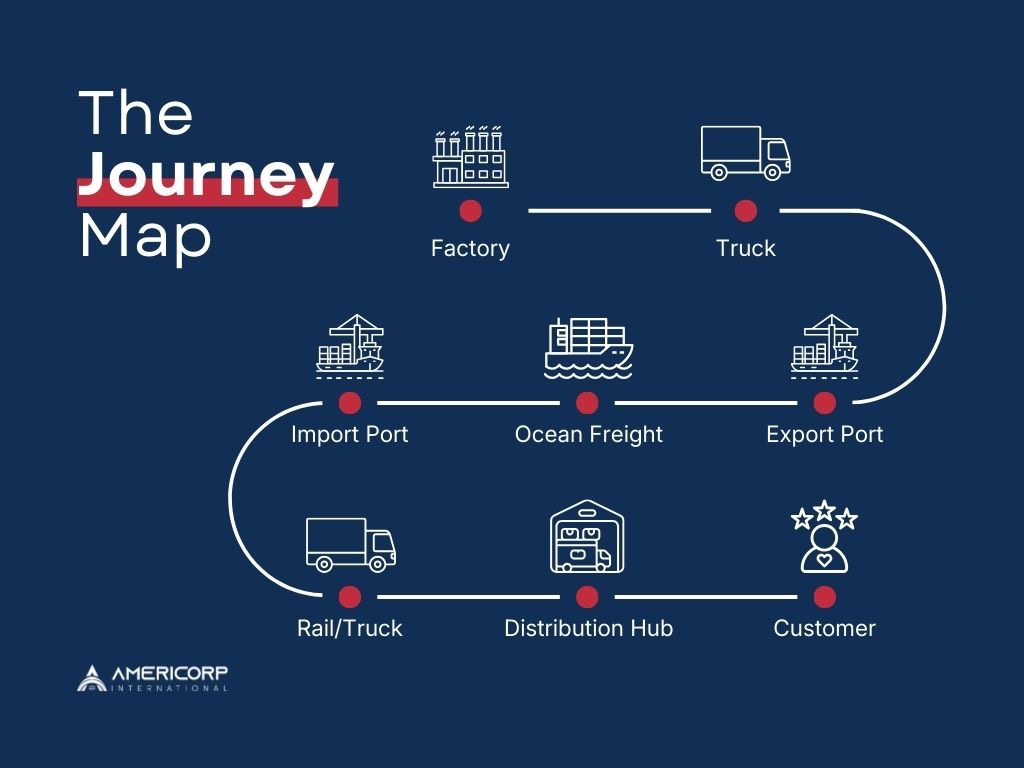
Each leg may involve different carriers, contracts, compliance checks, and tracking systems. When these components operate independently, visibility gaps appear. Documentation errors increase. Accountability becomes fragmented.
Industry data suggests that documentation discrepancies alone contribute to delays in nearly 10–12% of global shipments.
The issue is not transportation capacity. The issue is coordination.
Port Congestion, Geopolitics & Systemic Risk
Congestion remains one of the most persistent friction points in global trade. During peak disruption periods, vessels at major ports have faced delays exceeding 10 days.
Meanwhile, surveys across global enterprises indicate that over 70% of companies consider geopolitical instability a significant supply chain risk.
For polymer distribution, this translates into:
- Extended dwell times
- Demurrage and detention costs
- Inventory imbalances
- Missed production windows
- Strained customer relationships
The impact compounds across regions.
The Rise of Multimodal Integration
As supply chains grow more interconnected, reliance on multimodal transport has become standard. Research indicates that 60–70% of global cargo movements now involve multiple transport modes, combining sea, rail, and road.
More importantly, market studies show that over 60% of logistics service providers are prioritizing multimodal solutions to improve reliability and flexibility.
When effectively integrated, multimodal coordination can:
- Reduce shipping costs by up to 15% through optimized routing
- Improve transit reliability by over 20% in certain corridors
- Provide alternative routing during disruptions
- Strengthen overall network resilience
However, multimodal alone does not guarantee simplification.
Fragmented multimodal creates complexity.
Integrated multimodal reduces it.
From Fragmented Legs to Unified Flow
Traditional logistics models often optimize by segment, negotiating freight by lane, mode, or region independently. But polymer supply chains function as continuous systems.
A smarter model treats the journey from factory to customer as one connected flow:
- Load optimization at origin
- Coordinated port transition and documentation control
- Ocean freight integration with compliance oversight
- Seamless customs handling
- Intermodal rail or trucking alignment
- Regional inventory positioning
- Predictable last-mile delivery
When managed under a unified framework, handoff friction decreases. Visibility improves. Decision-making becomes proactive instead of reactive.
Complexity remains — but it becomes controlled.
Why Simplification Matters
In volatile trade environments, resilience is not built through isolated contracts. It is built through network design.
An integrated multimodal network provides:
- End-to-end shipment visibility
- Reduced documentation risk
- Lower total landed cost optimization
- Flexible rerouting capability
- Fewer single-point failures
- Improved schedule predictability
Instead of managing separate providers across disconnected legs, logistics operates within one coordinated ecosystem.
That is where efficiency compounds.
That is where reliability stabilizes.
And that is where delivery becomes predictable.
The Takeaway
Polymer logistics will always involve multiple modes, regulatory layers, and operational variables. Global trade will continue to face disruptions — whether from congestion, geopolitical shifts, or infrastructure constraints.
The difference lies not in eliminating complexity, but in managing it through integration.
When logistics operates in silos, complexity multiplies.
When connected through a coordinated multimodal network, complexity becomes streamlined execution.
Americorp’s multimodal network simplifies delivery — transforming global complexity into reliable, end-to-end performance from factory to customer.


