For many manufacturers, selecting a polymer supplier often begins—and ends—with comparing prices. While cost is undoubtedly important, choosing the lowest-priced supplier doesn’t always deliver the best business outcome.
A polymer supplier plays a much larger role than simply delivering raw materials. The right partner helps maintain production schedules, supports product quality, provides technical guidance, and minimizes supply chain disruptions. On the other hand, an unreliable supplier can contribute to production delays, inconsistent material performance, unexpected costs, and dissatisfied customers.
As manufacturing industries continue to face supply chain volatility, regulatory changes, and increasing customer expectations, selecting the right polymer supplier has become a strategic business decision rather than a purchasing transaction.
In this guide, we’ll explore the key factors manufacturers should evaluate when choosing a polymer supplier that supports long-term operational success.
Why Your Polymer Supplier Matters
A Supplier Is More Than a Material Provider
Modern manufacturers require more than a company that simply delivers polymer resins. Today’s supplier should act as a business partner capable of supporting production continuity, product performance, and long-term growth.
Leading polymer distributors consistently emphasize that successful partnerships are built on technical expertise, dependable logistics, and responsive customer support—not just competitive pricing.
Working with a reliable supplier offers several important advantages:
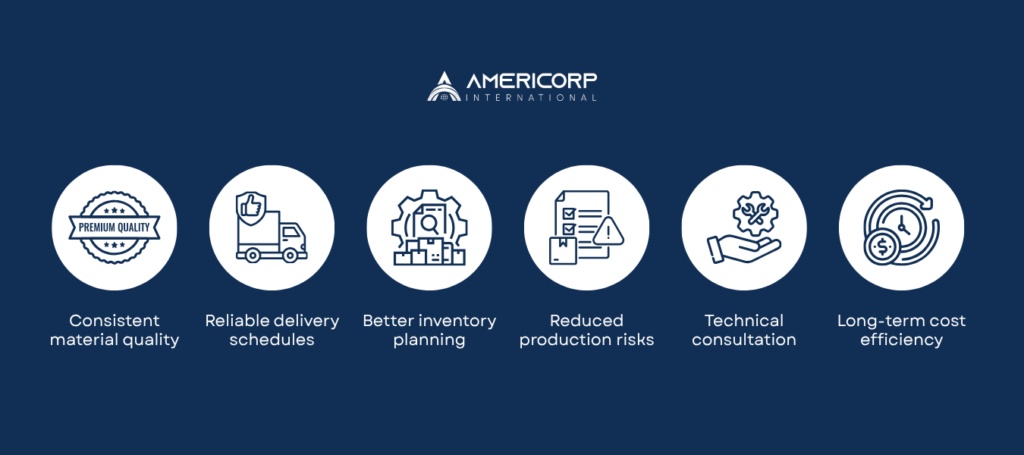
When these factors work together, manufacturers experience fewer production interruptions and greater confidence in meeting customer commitments.
The Value of Authorized Polymer Distribution
Not all sourcing channels provide the same level of reliability.
Materials may be purchased through traders, brokers, independent distributors, or authorized distribution partners. While each channel serves a purpose, authorized distributors often provide greater product traceability, direct relationships with resin manufacturers, technical documentation, and more consistent quality assurance.
This becomes especially important for industries where compliance, certification, and material consistency are critical.
Choosing a trusted distribution partner also improves communication during supply shortages or unexpected market disruptions.
Manufacturing Capabilities Matter
When evaluating a supplier, manufacturers should also assess the company’s operational capabilities.
Important questions include:
- Can they consistently supply your required volumes?
- Do they offer a broad portfolio of polymer grades?
- Are their manufacturing and quality systems well established?
- Can they scale as your business grows?
A supplier with strong operational capabilities is better positioned to support changing production requirements while maintaining consistent quality.
Supply Chain Resilience Is Now Essential
Over the past several years, manufacturers have experienced unprecedented supply chain disruptions caused by global events, transportation delays, geopolitical uncertainty, and fluctuations in raw material availability.
These disruptions have demonstrated that purchasing decisions should no longer focus solely on price.
Instead, manufacturers benefit from suppliers who can:
- Monitor global supply markets
- Identify alternative material sources
- Recommend equivalent polymer grades
- Communicate proactively during shortages
- Help minimize production downtime
Supply chain resilience has become a competitive advantage rather than simply a logistics function.
Better Suppliers Improve Inventory Management
Inventory planning depends heavily on supplier reliability.
Consistent lead times allow manufacturers to maintain leaner inventories while reducing the need for excessive safety stock.
Reliable suppliers also help by providing:
- Forecast support
- Demand planning
- Batch consistency
- Early communication regarding shortages
- Flexible supply agreements
These capabilities improve cash flow while reducing inventory-related risks.
Five Qualities of a Reliable Polymer Supplier
🛡️ 1. Consistent Product Quality
Product quality directly affects manufacturing performance.
Variations in material properties can increase scrap rates, reduce production efficiency, and negatively impact finished products.
Reliable suppliers maintain strict quality standards, provide complete documentation, and ensure consistent material performance across every shipment.
🚚 2. Reliable Supply Chain
Reliable delivery is just as important as material quality.
Manufacturers should evaluate:
- Lead time consistency
- Inventory availability
- Distribution network
- Logistics capabilities
- Emergency supply options
A dependable supplier minimizes production interruptions and supports stable manufacturing operations.
👨🔬 3. Technical Knowledge
The best suppliers provide far more than sales support.
They assist customers with:
- Material selection
- Processing recommendations
- Application development
- Regulatory compliance
- Troubleshooting production issues
Technical expertise helps manufacturers choose materials that improve product performance while reducing costly mistakes.
🏭 4. Industry Experience
Every industry has unique material requirements.
A supplier experienced in automotive, consumer goods, medical, electronics, or packaging applications better understands:
- Industry regulations
- Performance expectations
- Market trends
- Customer challenges
Their experience allows them to recommend practical solutions based on real-world applications.
🤝 5. Long-Term Partnership
Successful supplier relationships are built on trust.
Characteristics of a strong partnership include:
- Transparent communication
- Fast response times
- Collaborative problem solving
- Continuous improvement
- Shared commitment to business growth
The strongest supplier relationships evolve beyond transactions and become strategic partnerships.
Common Mistakes When Choosing a Polymer Supplier
Many manufacturers unintentionally create long-term challenges by focusing on short-term purchasing decisions.
Common mistakes include:
Choosing Based Only on Price
Lower prices may appear attractive initially, but inconsistent quality, delayed deliveries, or limited support often increase total operating costs over time.
Ignoring Technical Support
Without expert guidance, manufacturers may select materials that fail to meet processing or performance requirements.
Overlooking Delivery Performance
Late deliveries can stop production, delay customer shipments, and increase operational costs.
Failing to Evaluate Long-Term Reliability
A supplier should be capable of supporting future business growth—not just today’s purchase order.
Questions to Ask Before Selecting a Polymer Supplier
Before making your decision, ask these questions:
✅ Can they provide consistent material quality?
✅ Can they ensure reliable supply during market disruptions?
✅ Do they offer technical support and application expertise?
✅ Do they understand my industry’s requirements?
✅ How quickly do they respond when problems occur?
✅ Can they scale with my future growth?
✅ Do they provide transparent communication?
Answering these questions can help identify suppliers that deliver long-term value rather than short-term savings.
Conclusion
Choosing the right polymer supplier is an investment in your company’s long-term success.
While pricing will always remain an important consideration, manufacturers gain far greater value from suppliers that combine dependable supply, technical expertise, industry knowledge, and collaborative support.
As manufacturing continues to evolve in an increasingly complex global market, strong supplier relationships play a critical role in maintaining operational resilience, improving product quality, and supporting sustainable business growth.
At Americorp, we believe successful partnerships are built on trust, consistency, and a commitment to helping manufacturers overcome challenges with dependable polymer solutions and responsive service.